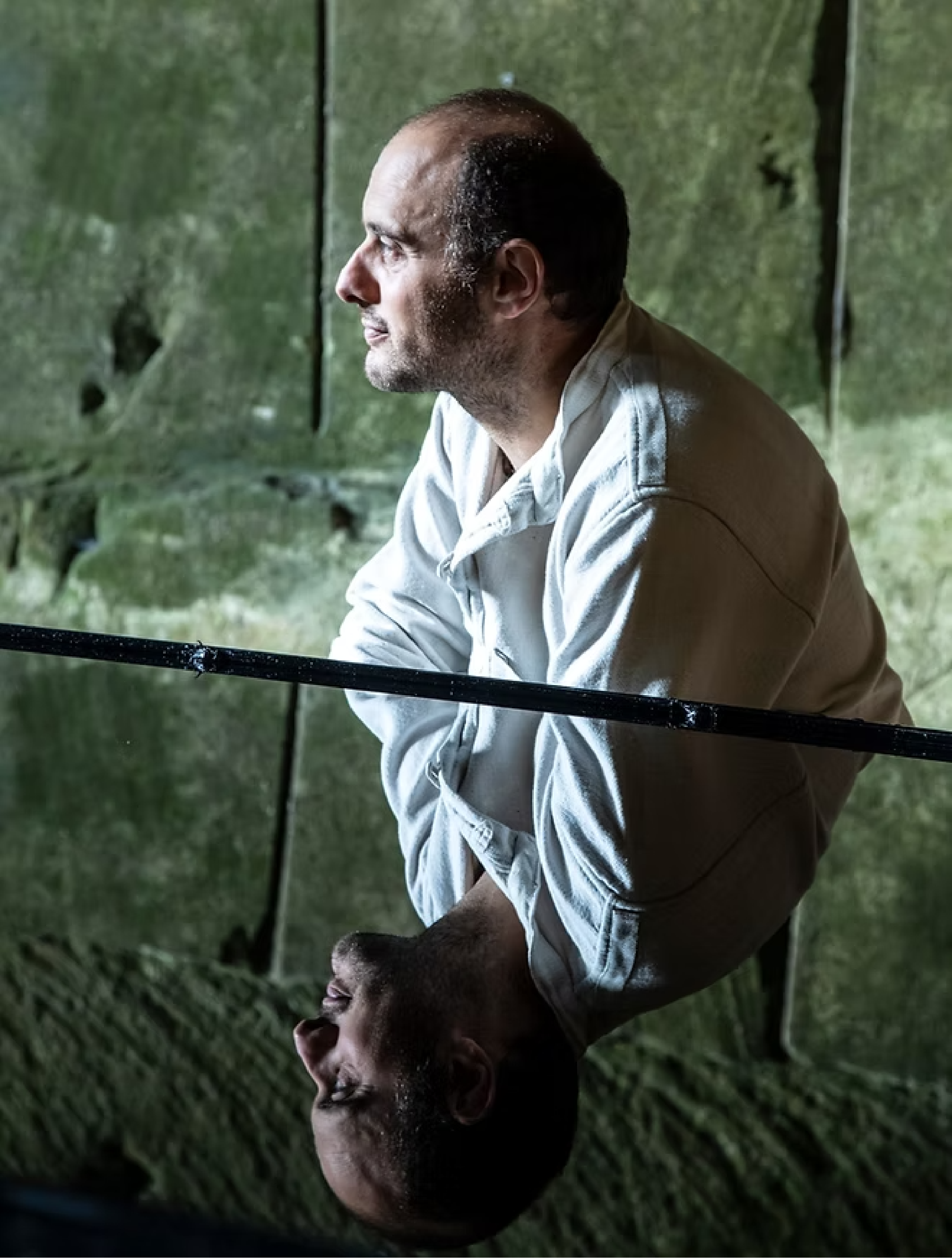
Francesco Pellisari: Beyond Disciplines
A sound sculpture by Francesco Pellisari can never be seen in its entirety. Its form is visible; its other half — the sound that fills the room and shifts with it — can be grasped only by the ear and the body. Pellisari works as artist, engineer, ceramicist, acoustician and designer at once, and his works sit precisely where these disciplines meet. Where does such freedom from boundaries come from? Part of the answer lies in the milieu in which he grew up. Francesco's father was a member of Gruppo 63, the Italian neo-avant-garde of the 1960s, which brought literature, music, theatre and the visual arts into dialogue. This is not to say that the artist follows the group's programme. Rather, he has inherited its experimental spirit: a readiness to question established categories. It is this connection that the essay sets out to explore.
Gruppo 63 was born in Palermo. In October 1963 some thirty young writers and intellectuals, among them Nanni Balestrini and Umberto Eco, gathered there during the International New Music Week to seek an alternative to the worn-out language of neorealism and traditional poetry. From the outset, then, this literary avant-garde took shape alongside new music, theatre, cinema and the visual arts, rather than apart from them.
Gruppo 63 brought together people from many fields of culture: poets, novelists, critics, composers and artists. The painters Achille Perilli and Gastone Novelli were among those present at its very first meeting. The group's significance lay not merely in placing different art forms side by side, but in making exchange and mutual influence between them possible. Scholars today regard the inherently interdisciplinary character of the neo-avant-garde as one of its defining features, and they identify the early 1960s as the moment when the very idea of intermediality was born in Italy: the notion that the intersection of arts and media gives rise to new forms of artistic creation.
Yet the group's members had no wish to merge every art form into a single, universal medium. Each remained within their own craft; the new emerged where those crafts intersected.
Here it is worth distinguishing between two concepts. Multidisciplinarity is when disciplines work side by side, each retaining its own method. Interdisciplinarity is when they fuse into something that can no longer be broken back down into its parts.
Both levels are present in Pellisari's work, and both converge in a single person. His method is multidisciplinary: each of his roles keeps its own logic and its own tools. The work itself, however, is interdisciplinary: form can no longer be separated from sound, nor sound from space. One and the same sound sculpture exists on several levels at once:
- as sculpture — an autonomous physical and material object;
- as a musical instrument — a source of sound;
- as the outcome of research — a synthesis of acoustics, engineering and scientific knowledge;
- as an architectural element — it interacts with the surrounding space and transforms it;
- as direct artistic experience — it is perceived through listening, movement and physical presence.
There is no clear boundary here between art, science and technology. Together they form a single work in which art meets science, technology, form, material and craftsmanship. In 1966, three years after that first meeting in Palermo, the American artist Dick Higgins proposed the term 'intermedia' for works of this kind: art that arises between the familiar art forms rather than simply placing them side by side. Sound sculpture is a case in point.
This is why I see an intriguing parallel between sound sculpture and Gruppo 63: sound remains sound, ceramics remain ceramics, architecture remains architecture. Yet in meeting one another they create a new artistic experience and a new space — immersive and embodied. The listener enters it in order to experience the work.
A comparison with artists who explore the possibilities of light, and use it to change the way we perceive space, is equally apt. Olafur Eliasson and the artists of the Light and Space movement, which emerged in Southern California in the 1960s (James Turrell, Robert Irwin, Doug Wheeler), create new spatial experiences through light: the walls, the corners and the very air of a room become part of the work. Francesco works with another invisible material — sound. Light changes the way we see space; sound changes the way we hear it and feel it with the body.
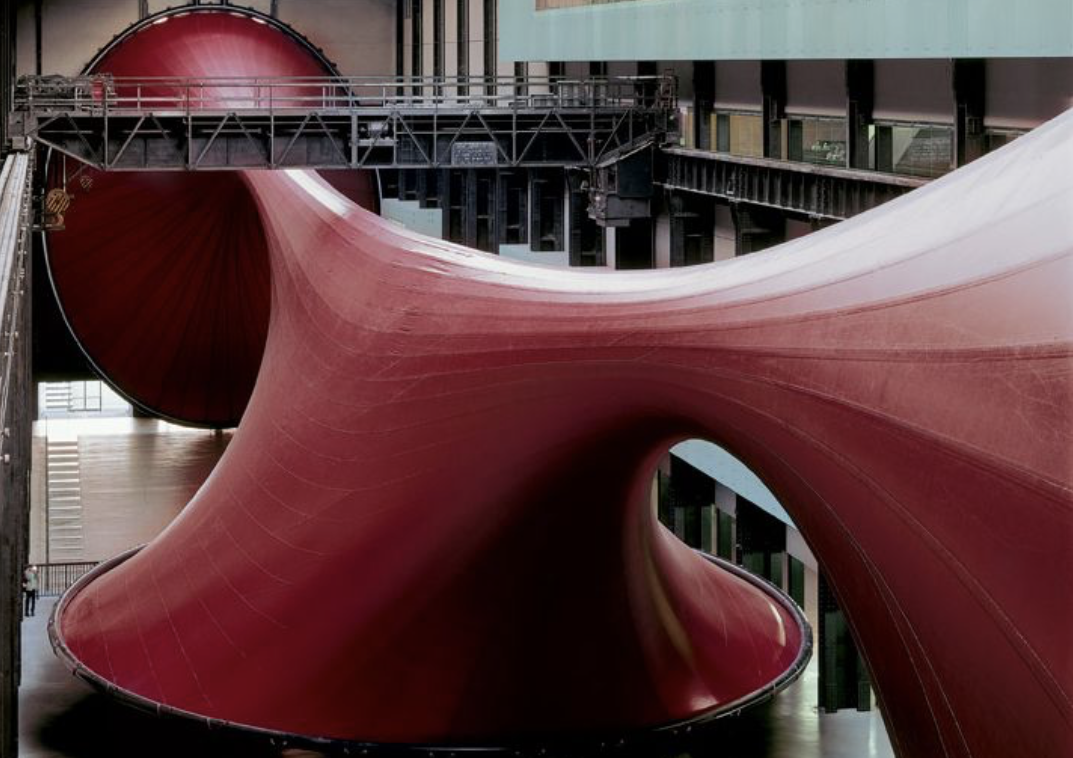
Tellingly, when our correspondence turned to the parallel with Light and Space and with Olafur Eliasson, Francesco recalled another work: Anish Kapoor's Marsyas (2002), created for the Turbine Hall at Tate Modern in London.
Your words brought to mind an artwork that moved me deeply and that feels close to my own research: Marsyas by Anish Kapoor, created for the Turbine Hall at Tate Modern. Its monumental, ear-like, trumpet-shaped form made me think of an immense instrument gathering the presence of the surrounding space. I found the experience profoundly moving. Francesco Pellisari
It is no accident that this work matters to Pellisari. Kapoor created a sculpture that makes no sound, yet is built as an instrument of perception: it gathers space as the ear gathers sound. Pellisari goes a step further and makes that instrument genuinely sound.
Sculpture has traditionally been understood as an autonomous visible object, with its own boundaries, material, form and viewpoint. The surrounding space serves above all as its backdrop.
With sound sculpture, things are different. It does not simply fit into an existing setting; it turns the surrounding space into an active part of the work. And this part of the sculpture is invisible: it can be perceived only through hearing and the body.
The process can be described as a series of interrelated stages:
- the sculpture generates a sound field;
- the sound field interacts with the architecture;
- architectural surfaces shape how sound travels and is reflected;
- the listener perceives not only the physical object but the entire surrounding space.
The work therefore does not end at the surface of the sculpture; it continues into its surroundings. This is particularly evident in OMNI and ORPHEO, where object, sound and space become interdependent elements.
The artist himself puts it with great precision:
This approach resonates with a process that has been unfolding in contemporary art for more than half a century. In her 1979 essay 'Sculpture in the Expanded Field', the American critic Rosalind Krauss showed that sculpture had stepped off its pedestal. It was no longer defined as a discrete object, but existed in relation to architecture and landscape. Since then, artists have increasingly worked not with the isolated object, but with space, architecture and the viewer's perception. Pellisari's works add to this 'expanded field' a dimension absent from Krauss's account: sound.
If a sculpture extends into space and operates as a sound system, it inevitably finds itself on the border with design. The question is especially pressing in Italy, where, as Francesco says, the debate over the distinction between fine art, craft and design has never quite died down.
Historically, European artistic culture established a hierarchy between the so-called arti maggiori (the major arts) and arti minori (the minor arts). Painting, sculpture and architecture traditionally held the higher rank, while ceramics, textiles, goldsmithing, glass and the other decorative arts were often assigned a lower status. This distinction is bound up, among other things, with the Renaissance history of the artist's professional identity: intellectual conception and authorship gradually came to be valued above the practical labour of the craftsmen who physically made the objects. Ever since, an object's functionality has often been seen as an obstacle to its recognition as art.
Yet Italian art history also has a strong tradition of challenging these boundaries. The Futurists sought to draw painting, sculpture, design, mechanics, industrial materials and everyday objects into a shared experimental field. Particularly close to Pellisari is Luigi Russolo, the artist who, in his manifesto The Art of Noises (1913), declared noise to be the material of music and built his own noise instruments, the intonarumori. For the first time, the artist became an inventor of sounding objects, and it is this line that Pellisari continues.
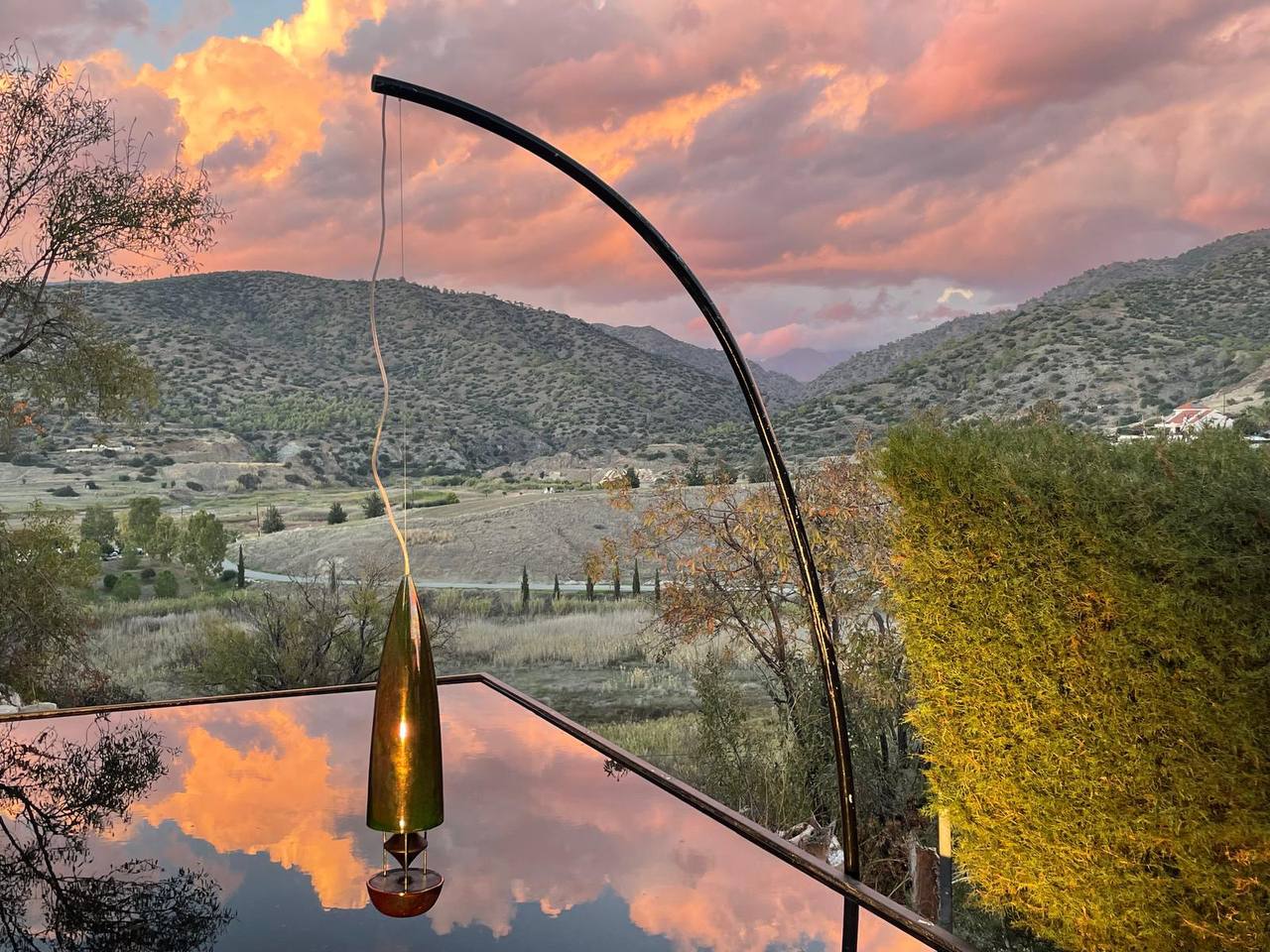
In his practice there is no opposition between artistic conception and skilled execution. He works with ceramics, wood and metal, draws on traditional craft techniques and brings in craftsmen at particular stages, yet he makes and carries through every decision himself, while drawing at the same time on contemporary technology, acoustic research and engineering.
Where function comes into play, however, Pellisari draws the line deliberately. Alongside his artistic practice he develops NACSound, a separate design line of acoustic systems:
One and the same person speaks two languages. Terracotta, a material with millennia of craft history behind it, is for art. Solid Surface, a contemporary engineered material, is for design. The technology and the sound are shared, but the status differs, and the decision rests not with an institution or the market, but with the author himself.
This raises a broader question: where does the boundary between fine art, craft and design actually lie, and who has the right to draw it? Pellisari's example suggests an answer: the boundary runs not along material, nor along function, but along the artist's intention.
The link with Gruppo 63 continues here too. Umberto Eco, one of those present at that meeting in Palermo, had published Opera aperta (The Open Work) a year earlier, in 1962. Eco explored the idea that a work of art need not have a single, fixed and final meaning. On the contrary, it may admit many interpretations and demands the active participation of whoever perceives it. Tellingly, some of Eco's earliest examples of the 'open work' were musical: compositions by Stockhausen, Berio, Pousseur and Boulez, in which the performer chooses the order and shape of what is heard.
Eco gave a special place to 'works in movement' — works that literally change their form before the viewer's eyes. One of his examples was Alexander Calder's mobiles, kinetic sculptures that, at the slightest current of air, compose ever-new configurations in space. Here sculpture is no longer a fixed form but a process, and each viewer encounters it in a different state.
In sound sculpture I see a continuation of this idea, now unfolding in space. As we have already noted, the work does not end at the surface of the object. A sound sculpture cannot be fully understood simply by looking at it: one has to be near it, listen, move through the space and interact with the sound field.
The work, therefore, cannot be reduced to its physical form. Its meaning and experience unfold in the interaction between object, setting and the person who encounters it.
What is more, every room has its own acoustic conditions. The perception of the sculpture changes with the architecture, the materials, the setting and the presence of the listener. The same work sounds different in every hall.
Music of the second half of the twentieth century made this dependence on space a subject of art. In John Cage's 4'33" (1952), what sounds is everything that happens in the hall during the performer's silence: rustling, the audience's breathing, noises from outside. In Alvin Lucier's I Am Sitting in a Room (1969), a voice is re-recorded again and again in a single room until the room's own resonances dissolve the words and the room itself begins to 'sound'. Pellisari moves in the same direction, but by sculptural means: his object does not mute the space; it makes it sound.
If the listener completes the work, then the figure of the author ceases to be the sole source of meaning. Almost at the same time as Eco, Roland Barthes took this thought to its limit: in his essay 'The Death of the Author' (1967), he argued that the meaning of a text is born not with its author but with its reader. In our conversations, Francesco and I returned more than once to the role the artist's ego plays in how a work is received and recognised.
Behind this question lies the traditional model of artistic authorship: the artist is regarded as the sole author of the work, conception is valued above execution, and the contribution of craftsmen, engineers and technicians remains invisible.
Yet the image of the solitary artist is historically fairly recent. In Renaissance Italy, a work was born in the bottega, a workshop where the master worked alongside pupils and assistants; it was in Verrocchio's workshop, for instance, that Leonardo began. The myth of the lone genius took its final shape only in the Romantic era. And in 1982 the American sociologist Howard Becker showed, in Art Worlds, that every work of art is the product of the collective labour of many people, even if it bears a single signature.
The problem becomes especially visible in the art of the second half of the twentieth century. In the 1960s Andy Warhol turned his New York studio into 'the Factory', where assistants printed the silkscreens and the artist himself declared that he wanted to be a machine. The name was programmatic: authorship no longer meant the touch of the artist's hand. Later the model was taken to an industrial scale. In Jeff Koons's studio, dozens of assistants — in some years more than a hundred — worked on pieces at once, while his mirror-polished sculptures were fabricated by specialist foundries. Damien Hirst admitted that he had painted only a handful of his famous spot paintings himself, and that the best of them, in his words, were made by his assistant Rachel Howard.
These examples reveal a paradox: the more people involved in making a work, the more brightly a single name shines in the signature. Assistants, founders, engineers and technicians remain invisible, even though without their skill the work would simply not exist. The market and institutions recognise the idea, not its realisation.
The problem remains relevant today. In a 2024 study published in the journal Il capitale culturale, the Italian art historian Francesco Leonardi writes about the craftsmen involved in making contemporary works of art. Their skill may be essential to the realisation of a work, and yet remain insufficiently recognised by art institutions.
Francesco's practice offers a different response to this problem. Work of this kind cannot be achieved by an artistic gesture alone, yet Pellisari does not hand it over to invisible makers. He works as artist, engineer, ceramicist, acoustician and designer himself. He brings in craftsmen only at particular stages, while developing and seeing through every technical and artistic decision himself, down to finishing the ceramics by hand. The gap between conception and execution on which the model of Warhol, Koons and Hirst depends simply does not exist here.
In this sense, Pellisari is closer to the Renaissance ideal of the uomo universale — the person who unites art, science and craft — than to the contemporary artist as brand. The very bottega in which Leonardo once began now fits within a single person.
Perhaps this points to a shift: away from the image of the artist as a genius who hands the idea over to others for execution, and towards the image of the artist as a researcher who commands every language of the work himself — from calculating the acoustics to the touch of the clay.
Francesco Pellisari's artistic practice can be understood in relation to the experimental cultural milieu in which he grew up — not as a direct continuation of the formal programme of Gruppo 63, but as an inheritance of its intellectual openness and its readiness to challenge established categories.
Pellisari does not divide art into autonomous disciplines; he creates a space in which they interact.
He does not set traditional craft against contemporary technology, but brings the two together — in his own hands. And he alone decides where art ends and design begins.
His sculpture is not an isolated object, but an instrument for exploring architecture, sound and human perception — one that the listener completes. Pellisari's practice exists at the intersection of art, craft, design, engineering and science. His method is multidisciplinary, his work interdisciplinary — and it is this meeting ground of disciplines that becomes his artistic language.
Notes & Sources
- Francesco Pellisari, letter to Irina Kandratsenka, 2026.
- Francesco Pellisari, official website.
- Fausto Curi, L'isola del nuovo. Cinquant'anni da Palermo, Mucchi Editore.
- Gruppo '63, Milan, Feltrinelli, 1964.
- Giovanna Lo Monaco, 'Tra figure, segni e parole', Arabeschi, 2020.
- Chiara Portesine, 'La "funzione-Baruchello" nella poesia della Neoavanguardia', Piano B, 2020.
- Florian Mussgnug, 'Gli anni sessanta e le origini dell'intermedialità in Italia', UCL.
- Dick Higgins, 'Intermedia', 1966.
- Rosalind Krauss, 'Sculpture in the Expanded Field', October, 1979.
- Umberto Eco, Opera aperta, Bompiani, 1962.
- Luigi Russolo, L'arte dei rumori, 1913.
- Roland Barthes, 'La mort de l'auteur', 1967.
- Howard S. Becker, Art Worlds, 1982.
- Francesco Leonardi, Il capitale culturale, 2024.